At Niibin Advisory Services, our approach to Indigenous facilitation is grounded in connection, purpose, and cultural integrity. When people think of facilitation, they often picture icebreakers, group activities, or PowerPoint slides. Those tools have their place, but we’ve spent years asking ourselves a deeper question: How can we create spaces that feel meaningful, authentic, and rooted in who we are as Indigenous people?
A turning point in our thinking came last April, when we participated in The Art of Hosting: Meaningful Dialogue and Participatory Leadership. The training didn’t introduce entirely new ideas—it affirmed what we already believed. Facilitation should centre real conversations, shared leadership, and environments where people feel genuinely heard. Since then, we’ve been steadily applying those teachings alongside our own cultural knowledge, shaping an approach that feels respectful, collaborative, and grounded in community.
Below are some of the core principles that guide our work.
Slowing Down to Speed Up
In many mainstream facilitation models, the emphasis is on speed—generating ideas quickly, moving toward decisions, and producing visible results. But in our experience, slowing down often leads to deeper clarity and stronger outcomes.
When we bring people together—whether to revise a Terms of Reference, update policies, or make a collective decision—we begin by remembering why the work matters. Slowing down gives people space to reconnect with their mission, purpose, and the reasons change is needed. It also anchors the group in shared intention before moving into problem solving.
At Niibin, we believe that meaningful work emerges from the collective. That means creating intentional space for reflection, listening, and gathering the knowledge of everyone in the room. When people feel heard, the work becomes more grounded, more aligned, and ultimately more impactful.
Honouring Cultural Protocols
Both of us grew up with Anishinaabe and Hodinosho:nih teachings, and those teachings shape how we open, hold, and close our gatherings. We place importance on having a good mind, acknowledging the work ahead, and creating space for ceremony when appropriate.
Many of our sessions have been strengthened by the presence of Elders, Knowledge Keepers, and Singers. We work closely with clients to design agendas that honour their protocols—whether that means opening words, songs, or other cultural practices. These moments aren’t “add ons”; they set the tone for respectful dialogue and shared purpose.
Relationship Building, Respect, and Reciprocity
These values are foundational within Anishinaabe and Hodinosho:nih ways of being, and they are essential when engaging with Indigenous communities. Relationship building is not a step in the process—it is the process. Trust cannot be rushed, and meaningful engagement cannot happen without it.
Respect and reciprocity guide how we show up. When we ask people to share their stories, experiences, and wisdom, we recognize that this is a gift. Our responsibility is to honour that gift and give something meaningful back.
For strategic planning projects, this often means hosting community events that bring people together to connect, share a meal, and celebrate the work underway. Each gathering is shaped around a thoughtful theme, with guest speakers whose insights support the community’s goals. These events deepen relationships and create a sense of shared ownership. We often leave feeling grateful, inspired, and more connected to the people we serve.
Shared Leadership
One of the most powerful tools we use is the circle. Sitting in a circle allows everyone to see and hear one another, removing hierarchy and creating a sense of equality. It invites honest dialogue, shared responsibility, and collaboration.
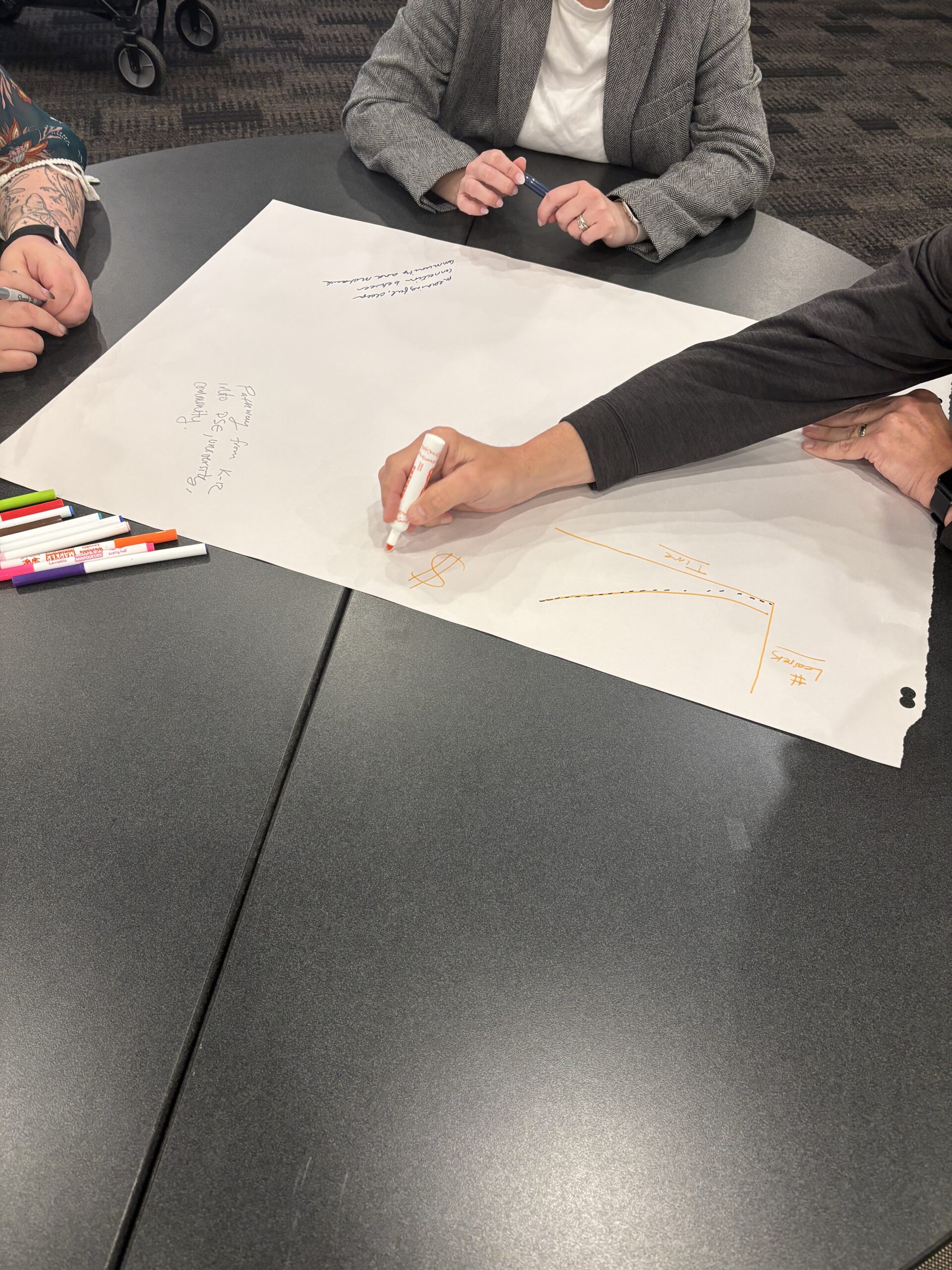
We used this approach during an engagement session that brought together directors, board members, and frontline workers from multiple organizations. Despite their different roles, the circle created a welcoming environment where everyone felt comfortable contributing. The result was a rich, productive conversation grounded in mutual respect.
Gathering Collective Wisdom
Indigenous facilitation recognizes that wisdom lives in the group, not in any single person. Our role is to create the conditions where that collective wisdom can surface.
During a recent strategic planning session, we worked with a group experiencing disconnection, unclear roles, and low engagement. Instead of rushing to solutions, we prioritized group work and meaningful conversation. Participants generated thoughtful recommendations that were later incorporated into their updated Terms of Reference.
It was powerful to witness the group reconnect, collaborate, and align around a shared vision. Many participants expressed gratitude for the chance to gather in person—to reflect, contribute, and be part of shaping their future direction.
Rooted in Indigenous Ways of Being
Cultural teachings remind us of the importance of connection, patience, and intention. At Niibin, these values guide not only how we facilitate, but also how we write our final reports and support clients through change.
We are grateful for the opportunity to help create spaces where meaningful conversations can happen—spaces that honour Indigenous ways of being, doing, and knowing. Our commitment is to continue learning alongside the communities we serve, fostering relationships built on trust, respect, and shared purpose.